










Patchouli and home fragrance, follow the guide
Patchouli is a scent with dense accents that Estéban likes to introduce in more or less generous touches into its scented compositions. However, the patchouli scent is often misunderstood. Forget the old-fashioned image that sticks to it; we have gathered everything important for you to know about this scent with character. Follow the guide and discover our home fragrances with notes of patchouli, ranked from the strongest intensity to the mildest: Cèdre, Légendes d'Orient, Ambre, Teck & Tonka, Néroli.
What is patchouli?
Patchouli is an aromatic plant belonging to the Lamiaceae family, native to Southeast Asia, particularly India and Indonesia. The large, velvety leaves of the patchouli plant, which grows to about one meter high, have a strong characteristic odor due to chemical compounds present in the leaves: notably sesquiterpenes, patchoulols, and norpatchoulenes. An essential oil commonly used in perfumery is extracted from these leaves.
Along with citrus, patchouli is, in fact, one of the most widely used natural raw materials. Patchouli leaves are harvested by hand, generally early in the morning when the oil content is at its highest. After being crushed, the leaves are placed in a still and steam-distilled. The steam passes through the leaves, carrying the essential oil with it. The steam is then cooled, and the essential oil is collected.
Patchouli, a scent recognizable among a thousand
The distinctive scent of patchouli (a trail with dense, extremely rich accents) makes it an easily identifiable ingredient. Patchouli contains woody, earthy, amber, and sometimes even smoky notes that give it all its personality.
Due to its strong olfactory presence, it is often used as a base note in perfumes to give depth, warmth, and richness to scented compositions.
Patchouli in the olfactory families of perfume
Patchouli is a woody raw material that often enters into the composition of chypre perfumes.
According to Le Trésor de la Langue Française, the name "chypre" comes from the Mediterranean island of the same name; however, in the perfume world, many associate this exotic name with François Coty's perfume, named Chypre, released in 1917.
Chypre perfumes combine a note of oakmoss, which defines this olfactory family, and an assembly of notes including bergamot, lemon, mandarin, patchouli, and labdanum. Chypre perfumes, and by extension patchouli, which is often associated with them, are magnetic perfumes full of character, often considered sophisticated and elegant.
Patchouli is not, however, limited to the chypre olfactory family: it can also be associated with other families and combined with a wide variety of notes.
Thus, the patchouli scent is often used as a base note in perfumes to bring an earthy, dark, and camphorous depth to the compositions (often woody or oriental) that contain it. Mixed with citrus, patchouli can be used in fresh or hesperidic perfumes, while when associated with floral notes, it can be used in softer floral perfumes without losing its magnificence.
Patchouli and home fragrance
Patchouli is a note frequently used in home fragrances. Its earthy, woody, rich, and sensual scent helps to create a warm and relaxing atmosphere.
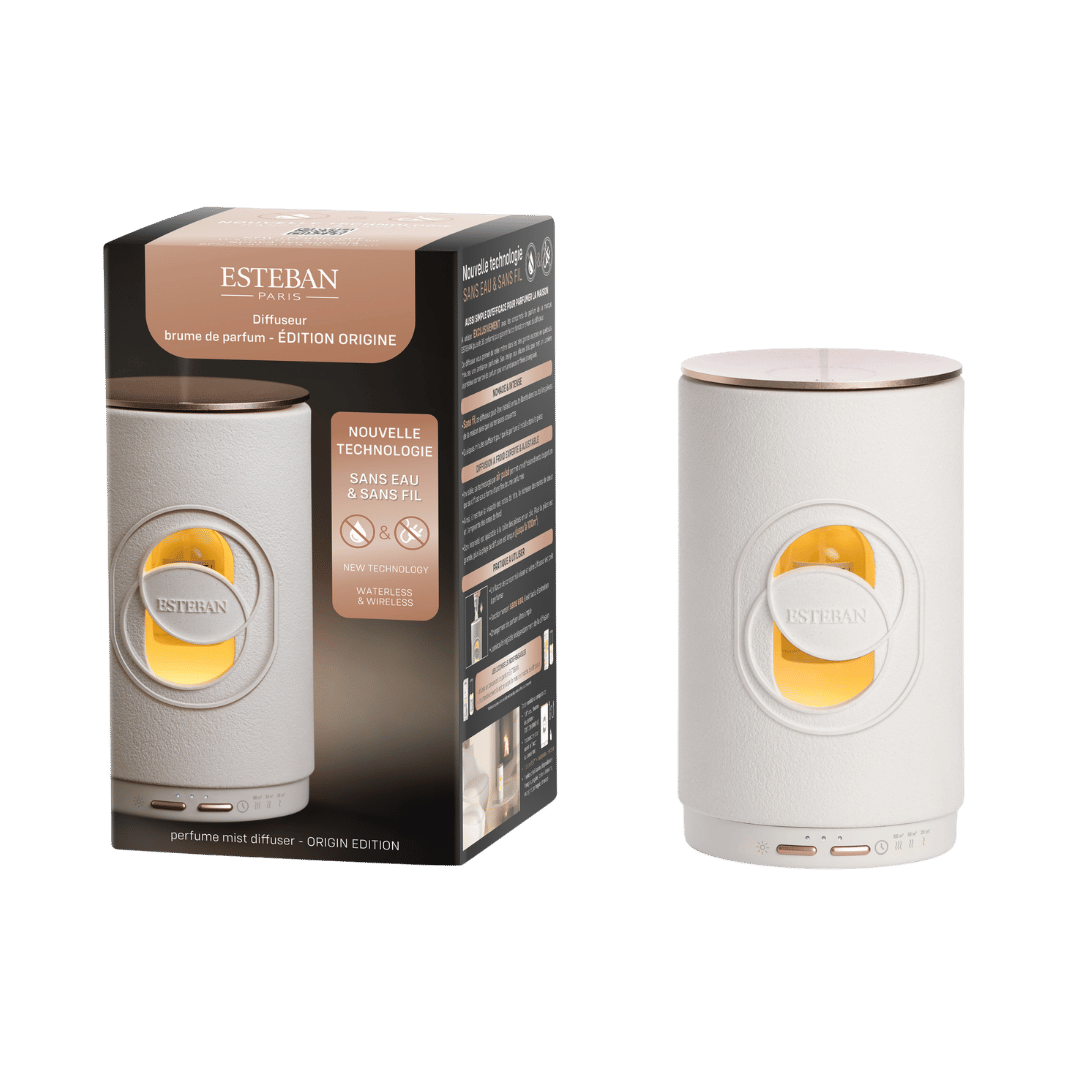
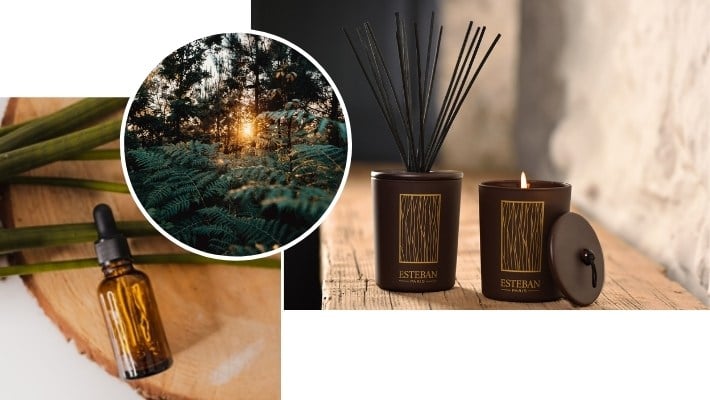
Because of the heady accents of the patchouli scent, the ingredient is used by Estéban in small touches, in the heart or base of our home perfumes, thus allowing it to anchor and magnify lighter notes. Its numerous olfactory facets, from the freshest to the most sensual, allow perfumers to adapt it as they wish, giving free rein to their creativity. Home fragrances containing patchouli are found at Estéban in the form of candles and scented bouquets, home sprays, or even mist diffusers.
Discover below each of our collections of home fragrances with patchouli notes, ranked from the strongest intensity to the mildest: Cèdre, Légendes d’Orient, Ambre, Teck & Tonka, Néroli.
In the Cèdre collection, we find heart notes built around patchouli, which provides a pleasant woody scent.
In the Légendes d’Orient collection, the patchouli scent makes this spicy and amber perfume even more sensual and rich.
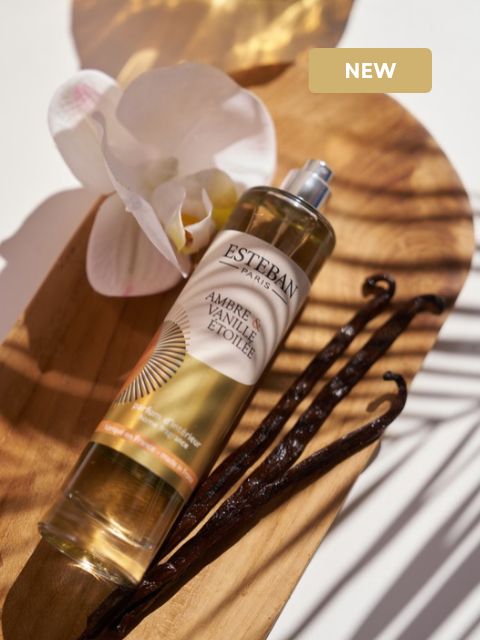
Our Ambre collection, warm and sweet, also counts patchouli among its base notes. Its woody and voluptuous facet thus contributes to the deep and elegant trail of this collection.
Associated with tonka bean, patchouli brings creaminess to the powerful trail of our Teck & Tonka collection, made of spices, burning balsams, and warm woods.
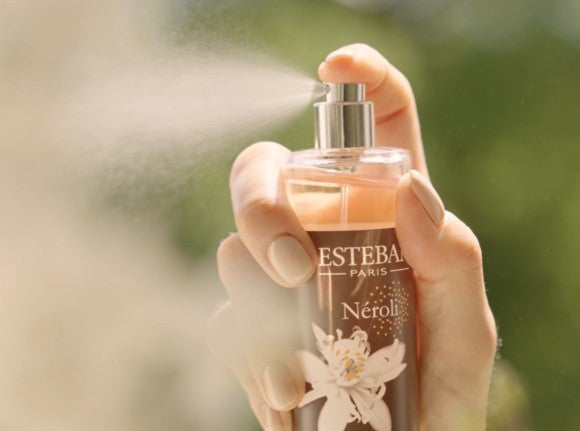
Finally, the patchouli note is present in our iconic Néroli collection, contributing to its unique trail that fills the home with an elegant, sensual, and enveloping halo.
Light a scented candle with patchouli notes, and let yourself be transported into the comfortable and enveloping atmosphere of a sweet evening. The Ambre and Légendes d'Orient home sprays with patchouli heart or base notes are perfect for refreshing the air, while home fragrance diffusers with patchouli essential oil are incomparable for a successful sensory journey.
Patchouli is a timeless ingredient and a must-have in Estéban home fragrances. The richness of its facets brings depth to the compositions, for a unique olfactory experience.