












Featured ingredient: Cedar
Today, in the world of home fragrance, cedar is emerging as a key ingredient, lending its comforting woody character to our homes. Here is the essential guide to enchanting your spaces with this captivating fragrance.
Cedar in home fragrance
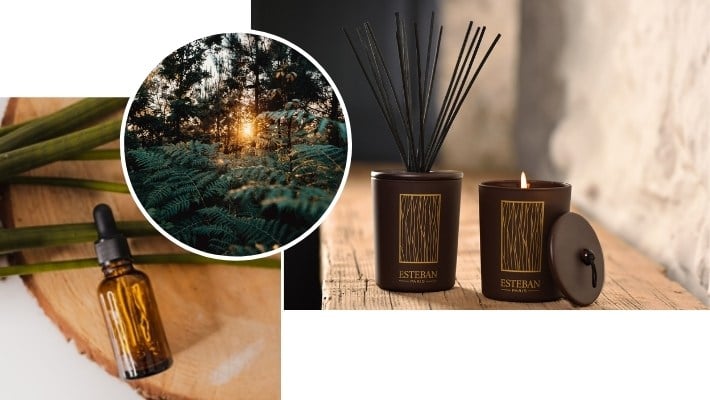
There are certain essences that, with a simple waft, transform the atmosphere of our interiors. At the heart of this olfactory alchemy, cedar stands out, embodying in itself a sensory journey into the heart of wild nature. With its woody trail, it transforms every space into a haven of peace. Carried by a diffuser, a candle, or even a room spray, cedar becomes the architect of a space that reflects your personality, lending its comforting character to our homes.
As a tribute to this fabulous tree, inspired by those majestic coniferous forests with their fragrant branches, discover the Cedar fragrance by Estéban, an iconic collection from the House that has been enchanting the brand's loyal followers for over 35 years.
Cedar: origin and symbolism
An emblem of longevity, this majestic tree has long captured the imagination and senses of humanity with its robust wood and enchanting fragrance.
This tree has, throughout history, been a pillar of construction and craftsmanship. In the heart of ancient forests, it stands proudly, a symbol of strength, durability, and timeless beauty.
Since antiquity, cedar has been put to use by the Egyptians, not only for embalming (its sawdust, both fragrant and bitter to insects, was used to embalm bodies) but also to heal wounds (using its resinous gum) and to build sarcophagi. Its wood, both fragrant and possessing a beautiful golden-yellow hue, was prized by the Greeks, the Phoenicians, and the Persians for the construction of their palaces, the creation of furniture, the building of ships, and for their sculptural works. It is said that King Solomon's palace was built exclusively from Lebanese cedar wood, testifying to the value and importance of this wood essence throughout the ages.
Which olfactory family does Cedar belong to?
Cedar belongs to the vast family of woody notes, distinguished by its opulence and richness. This family offers a palette of woody notes ranging from the driest to the most humid, including milky, smoky, or even earthy facets, depending on the essences chosen. Beyond cedar, the main players in this olfactory family include sandalwood, patchouli, and vetiver, not to mention guaiac wood and oud wood. These essences, often associated with men's perfumery, are generally present as base notes—their ability to act as powerful fixatives gives perfumes better longevity and a solid structure.
The different cedar essences
Different varieties of cedar are distinguished according to their place of origin. Botanists distinguish the following species:
- Lebanese cedar (Cedrus libani)
- Atlas cedar (Cedrus atlantica)
- Himalayan cedar (Cedrus deodara)
- Virginia/Texas cedar, also called "Red Cedar," is actually a type of juniper (Juniperus virginiana). Its high rate of Cedrol (an odorant molecule very characteristic of cedar, dry and woody) nevertheless allows it to be related to a "false cedar." This last essence is the most used in perfumery, appreciated for its scent evoking a wooden cabin.
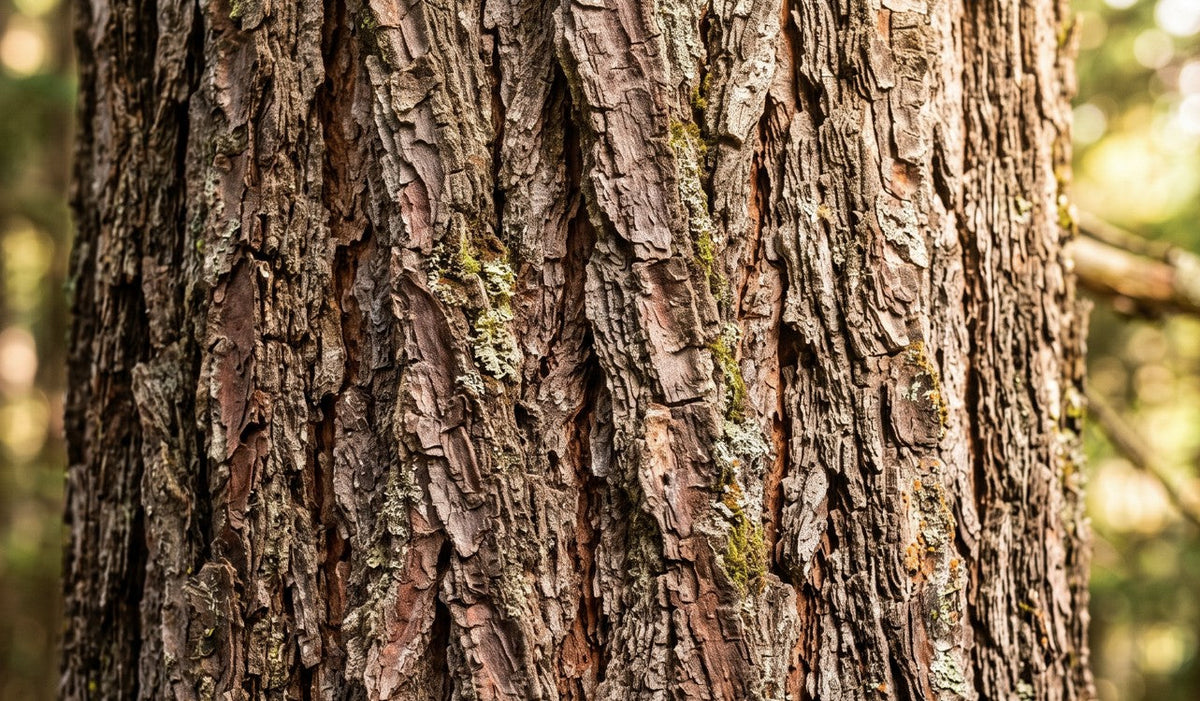
The cedar is an imposing tree, capable of reaching 50 meters in height and 15 meters in circumference. A symbol of life and knowledge in many traditions, it can live for more than 1,000 years. While a large part of the iconic Cedar Forest of Lebanon—described as the "most famous natural monument of humanity" by Lamartine—no longer exists, very beautiful specimens of Cedrus libani are said to still exist in Japan.
What does cedar smell like?
Virginia and Texas cedars have similar aromas: a warm, dry woody note reminiscent of childhood memories (referring to the smell of school children's wooden pencils) or an active woodworking shop, with its fresh wood shavings. The wafts of this cedar are harmonious and soft, and its citrusy facets offer a sensation of freshness and cleanliness. Its well-balanced, woody perfume confers a reassuring and elegant touch to the creations that contain it, making it a preferred choice for body fragrances as well as home perfumes.
Atlas Cedar, for its part, has a more acidic and animalic odor. Its essential oil, although more intense than that of Virginia or Texas, remains much less used in perfumery.
In the world of perfumery, cedarwood plays a fundamental role because it provides a backbone to perfumes by bringing depth and coherence to the olfactory structure, from its initial wafts to the most lasting notes.
When it is dominant in a perfume, the result is often a bold and strong fragrance that evokes wide-open spaces, sumptuous forests, and wild nature.
Cedar and harmonies in perfumery
Cedar harmonizes with various scent families, although it is primarily integrated into woody compositions. Capable of infusing from the top note to the base notes, it often finds its place as a base note in olfactory blends thanks to its remarkable persistence and ideally serves as a central pillar in the development of a perfume.
Cedar essence can harmonize with other woody notes like patchouli, vetiver, and sandalwood to develop a scent with a pronounced and unequivocal woody message.
The fresh facet of cedar can be accentuated by citrus or "cold" spice notes, as in Estéban's Cedar fragrance, where grapefruit and nutmeg create a dynamic opening for a composition that is both elegant and sparkling.
What are the virtues of Cedar?
Endowed with purifying properties, cedar essential oil is said to facilitate breathing. Its delicate, woody perfume also encourages meditation. In the context of psycho-energetic olfactotherapy, Atlas cedar essential oil is used to awaken strength and courage, the symbolic attributes of this ruler of the woods. This venerable tree is said to encourage us to restructure ourselves with perseverance and confidence, and to find a firm will to achieve our projects.
As a side note: it was the salvation of Captain Jacques Cartier's crew, who were suffering from scurvy, in the heart of the pitiless Quebec winter at the beginning of the 16th century.
Sources:
- - Le guide des émotions olfactives, équilibre et bien-être grâce à l’aromachologie, by Patty Canac
- - https://www.olfastory.com/famille-olfactive.html
- - https://www.olfastory.com/matiere/cedre
- - https://www.sylvaine-delacourte.com/fr/guide/la-facette-boisee
- - https://www.sylvaine-delacourte.com/fr/blog/le-cedre-en-parfumerie
- - https://www.courrierinternational.com/article/blog-liban-les-cedres-du-liban-un-tresor-naturel-a-proteger.